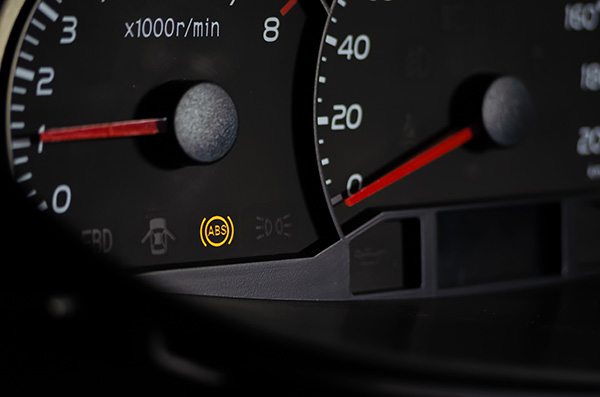
ABS is one of those systems you barely think about until the road is slick and you need a hard stop. Instead of the wheels locking up and sliding, ABS helps keep the tires rotating so you can still steer while braking. The whole system depends on accurate wheel speed information, and that comes from the ABS sensors.
When a sensor starts lying or dropping out, braking can feel strange, warning lights pop on, and other safety features may switch off too.
How ABS Sensors Actually Read Wheel Speed
Each wheel has a sensor that tracks rotation speed. Depending on the vehicle, that sensor reads a toothed ring, a magnetic encoder, or a built in tone ring that’s part of the wheel bearing. The sensor sends a signal to the ABS module, and that module compares all four wheels many times per second.
The important thing is consistency. The module isn’t only looking for a wheel that slows down fast. It’s also looking for one wheel that reports a speed that does not match the others, especially during braking. If one sensor reports a sudden drop to near zero while the others show the car still rolling, the system has to decide whether that wheel is locking up or the signal is wrong. Either way, the vehicle may change how it brakes, or it may disable certain functions to avoid making a bad decision.
What Happens During A Hard Stop When ABS Kicks In
During a panic stop, the module watches for a wheel that’s decelerating too quickly compared to the others. When it sees that, it briefly reduces brake pressure to that wheel, then reapplies it. This happens rapidly, and it’s why you feel the pedal pulse and hear a buzzing or chattering sound.
That pulsing can surprise drivers who have never felt ABS before, but it’s usually a sign the system is doing its job. The goal is controlled traction, not perfect silence. Where it gets tricky is when a sensor is failing and ABS activates when it should not, such as during a gentle stop in a parking lot. That’s often a sign the module is reacting to bad wheel speed data.
Common Failure Patterns We See With ABS Sensors
ABS sensors live in a rough neighborhood. Road salt, water, heat, vibration, and debris all take a toll. Some failures are electrical, and some are mechanical, even though the sensor itself is an electrical part.
Here are a few patterns we see often:
When we diagnose an ABS sensor concern, we don’t just ask if the sensor is sending a signal. We also ask if it’s sending a believable signal, at the right time, and under the conditions that triggered the warning.
Symptoms Timeline: From Occasional Light To Weird Brake Feel
Early on, the ABS light may come on once, then disappear. That’s common with an intermittent sensor signal, especially after rain, a car wash, or a cold morning. Some drivers notice nothing else and keep driving for weeks because the brakes still feel normal.
Next, you may see the traction control or stability control light join the party. Those systems rely on wheel-speed data, too, so a single bad sensor can disable multiple features. At this stage, you might notice small changes like the speedometer acting odd on certain vehicles, or cruise control not working, depending on how the vehicle shares wheel speed information.
Later, the brake feel can change. A classic complaint is ABS activation at very low speed, right as you’re almost stopped, even on dry pavement. The pedal may chatter, and the car may feel like it takes an extra moment to stop. That’s not something to ignore, because it can increase stopping distance in a situation where you expected a smooth, controlled stop.
A Few Observations That Help Pinpoint The Issue
You don’t need special tools to notice the clues that make diagnosis faster. If you can answer a few simple questions, it helps narrow where to look first.
- Does the light come on only after driving for a while, or right away?
- Does it happen more in wet weather, or after the vehicle sits overnight?
- Does the pedal pulse during gentle stops at low speed?
- Do you hear a grinding or humming noise that changes with speed, which could hint at a bearing issue?
- Did the problem start after tire service, brake work, or a hard pothole hit?
We’ve seen cases where a harness clip broke and the wiring rubbed through after a turn, and we’ve seen cases where corrosion pushed the sensor just far enough out to confuse the system. The pattern you notice often points toward which one it is.
Decision Mini-Guide: When It’s OK To Drive And When It’s Not
If the ABS light is on but the brake pedal feels normal, and the car stops smoothly, you can usually drive carefully for a short time while you arrange service. Your base brakes still work. What you may have lost is ABS, traction control, and stability support, which matter most in rain, snow, gravel, and emergency stops.
If the brake pedal is pulsing during normal low-speed braking, or the car feels like it is not stopping consistently, move it up the priority list. Also take it seriously if multiple warning lights are on and the vehicle seems to be acting differently than normal. If you have a red brake warning light, a low fluid warning, or the pedal feels soft, that’s a different category. At that point, it’s safer to stop driving and get help.
Get ABS Sensor Diagnostics in Hillsboro, OR with Precision Import Repair
If your ABS light is on, your traction control is disabled, or you’re feeling odd ABS activation during normal braking, it’s time to get the system checked before it catches you on a wet road. We’ll confirm which wheel is dropping out, inspect the sensor, wiring, and related bearing and tone ring components, and recommend the repair that actually solves the cause.
Get ABS sensor diagnostics in Hillsboro, OR, with Precision Import Repair, and we’ll help you get back to confident, predictable braking.
Follow us on Facebook for Updates!