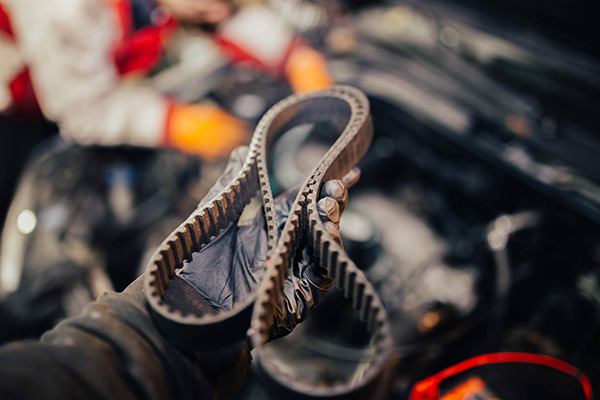
Timing belt service is easy to delay because the engine can seem completely normal right up until it isn't. The car still starts, still runs, and still drives the way it always has, so many drivers assume the belt can wait a little longer. That is where timing belt problems get expensive.
The safest time to replace a timing belt is rarely after the engine starts warning you loudly.
Why Timing Belt Service Should Be Planned, Not Guessed
A timing belt keeps the engine’s moving parts in sync. That timing has to stay exact. Once the belt is too old, too worn, or too weak, the risk extends beyond rough running or a no-start. On many engines, a failed timing belt can cause internal engine damage that costs far more than the service itself.
That is why timing belt replacement is planned around mileage, age, and service history rather than waiting for a clear symptom.
Mileage Is One Of The Biggest Clues
For many vehicles, timing belt service falls somewhere between 60,000 and 100,000 miles. The exact interval depends on the engine, so the best place to start is the manufacturer’s recommendation. If the engine is approaching that number and the belt has not been replaced, that alone is enough to take the service seriously.
Mileage counts because timing belts wear with use, heat, and repeated engine cycles. Once the interval gets close, the question stops being whether it still looks okay and becomes whether it is worth taking the risk any longer.
Age Counts Too
A low-mile vehicle is not automatically safe. Timing belts are made of reinforced rubber, and rubber ages over time. A car that has not been driven much can still need timing belt service if the belt has simply been in the engine for too many years.
That catches drivers by surprise all the time. The odometer looks fine, but the belt itself is aging anyway. A vehicle that sits a lot or sees light use still needs timing belt service, even if the manufacturer doesn't require it, based on age.
Missing Service History Is A Warning On Its Own
If you bought the vehicle used and do not have proof that the timing belt was changed, that uncertainty matters. Timing belt service is not the kind of thing you want to assume a previous owner handled. If the records are missing, the safest move is to treat the belt as unknown rather than trusted.
An inspection and service-history review is a lot cheaper than guessing wrong.
Oil Leaks Can Push The Belt Toward Early Failure
A timing belt does not handle contamination well. If oil reaches the belt area through a front engine seal leak, cam seal leak, or nearby engine leak, the belt can wear out faster than expected. That is one reason timing belt service should not be judged by mileage alone if the engine has been leaking in that area.
A belt that is being exposed to oil is not aging under normal conditions anymore.
Why Small Noises Should Not Be Ignored
Some engines do leave a few clues. A ticking or rattling sound near the timing cover, rough running, or a check engine light related to timing can all point toward trouble. Tensioners and pulleys in the same area can also create warning signs.
A few clues that move timing belt service higher on the list are:
- Overdue mileage
- Advanced belt age
- Unknown service history
- Oil leaks near the timing cover
- Rough running or unusual front-engine noise
Those signs should not be treated like background noise. They are telling you the service deserves attention now.
Why Timing Belt Service Usually Includes More Than One Part
A proper timing belt job usually includes the tensioner, idlers, and, on many engines, the water pump. Those parts work in the same area and age under the same conditions. Replacing only the belt can leave older parts behind that may still fail and undo the value of the job.
That is why the full service makes more sense than doing the minimum and hoping everything else holds together.
Why Waiting Is So Risky
Timing belts are not like other wear items that gradually make themselves impossible to ignore. They can fail before the driver feels much of anything. Once that happens, the repair is no longer just a maintenance visit. It can become major engine work in a hurry.
That is why the best way to know when your engine needs timing belt service is to check the mileage, check the age, check the records, and stay ahead of the failure point instead of waiting for the engine to make the choice for you.
Get Timing Belt Service In Hillsboro, OR, With Precision Import Repair
If your engine is getting close to its timing belt interval or you are not sure whether the belt has ever been replaced, Precision Import Repair in Hillsboro, OR, can help you review the timing belt schedule and decide whether the service is due before the risk gets much higher.
Bring it in before an overdue timing belt turns a routine service into major engine damage.
Follow us on Facebook for Updates!