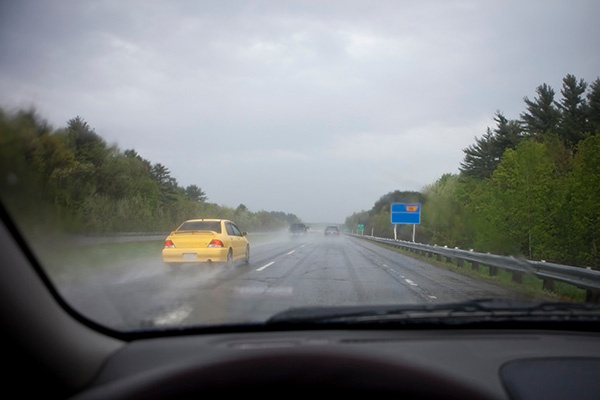
Wet roads change what you can ask of a tire. A tire that feels acceptable on dry pavement can lose grip much sooner once rain starts covering the road, especially during braking, quick lane changes, or when water collects in worn pavement.
Here in Oregon, tires spend plenty of time dealing with wet conditions, so we pay close attention to tread depth, pressure, age, and wear patterns. These five tire problems are worth correcting before rainy roads expose them at the worst possible time.
1. Low Tread Depth Makes It Harder to Move Water
Tread grooves give rainwater somewhere to go as the tire rolls across the pavement. As those grooves wear down, the tire becomes less effective at clearing water from underneath the contact patch.
That does not mean a worn tire suddenly loses all traction, but the margin gets smaller. Wet braking distances increase, and hydroplaning becomes easier at higher speeds or in standing water. During an inspection, we measure tread across several areas because one shoulder can be worn much farther than the center.
2. Uneven Tire Wear Reduces the Grip You Actually Have
A tire can show decent tread in one area and be nearly worn out in another. Alignment problems, worn suspension parts, incorrect pressure, and missed rotations can all create this kind of uneven wear.
Inner-edge wear is especially easy to overlook because it hides underneath the vehicle. We often find tires that look acceptable from the outside but have very little tread left on the inside shoulder. On wet roads, that missing tread means part of the tire has much less ability to clear water, even though the rest of the tread still looks usable.
3. Low Tire Pressure Makes the Vehicle Less Predictable
Underinflated tires flex more and change the shape of the contact patch. That can make steering feel less precise and cause the tire shoulders to carry more of the load.
Low pressure also creates additional heat inside the tire. On a rainy highway, you are already relying on the tire to maintain traction through standing water and road spray. Adding poor inflation creates another problem for the tire.
Common signs of a pressure problem include:
- A tire-pressure warning on the dashboard
- One tire looking lower than the others
- Repeated pressure loss after adding air
- Heavy wear on both outer shoulders
- Slower steering response
- A vehicle that feels different during turns
If one tire keeps losing pressure, we look for the reason instead of treating repeated air top-offs as the repair.
4. Old or Cracked Tires Can Lose Wet-Weather Grip
Tread depth is only one part of tire condition. Rubber gets harder as it ages, especially after years of heat, sunlight, and weather exposure.
An older tire can still have visible tread while providing less grip than it did when the rubber was fresh. Cracks between the tread blocks or along the sidewall tell us the tire has been aging, and deeper cracking deserves attention. We check the manufacture date and physical condition when deciding whether an older tire still belongs on the road.
5. Alignment and Suspension Problems Can Ruin Good Tires
A new tire will not stay new for long if the wheel is sitting at the wrong angle. Too much toe or camber can scrub tread off one edge while the rest of the tire continues looking healthy.
Worn tie rods, control arm bushings, ball joints, shocks, or struts can also change how the tire contacts the road. Regular maintenance helps us catch those problems before the tread is badly damaged. If we see an unusual wear pattern, we want to correct the suspension or alignment issue before another set of tires goes through the same thing.
Wet Weather Can Expose Tire Problems Before You Expect It
Drivers sometimes first notice a tire problem in heavy rain. The steering feels lighter through standing water, the car moves around more on the highway, or the tires spin more easily when pulling away from a stop.
Those symptoms deserve attention, but driving style still counts. Even healthy tires can hydroplane if you hit enough water at too much speed. Slow down in heavy rain, leave more room to brake, and avoid sudden steering inputs when the road is covered with standing water.
Check All Four Tires Before the Rainy Season
Looking at one front tire doesn't tell you the condition of the whole set. We compare tread depth, pressure, age, and wear patterns at all four corners.
That is especially important on all-wheel-drive vehicles, where large differences in tread depth can create additional drivetrain concerns. If one tire is damaged or worn much farther than the others, we look at the complete set before recommending whether one, two, or all four should be replaced.
Get Tire Service In Hillsboro, OR, With Precision Import Repair
If your tires are worn, cracked, losing pressure, or showing uneven tread before Oregon's wet weather gets heavier, Precision Import Repair in Hillsboro, OR, can inspect your tires, alignment, and suspension to identify what needs attention.
Schedule a tire inspection before rainy roads expose a problem, and follow us on Facebook for shop updates and useful vehicle care information.
Follow us on Facebook for Updates!